
Entry Requirements

  • 5+ GCSEs at 9-4
  • Grade 7 in mathematics
  • Grade 5 in English language

Contact

Dina Grozdanic
Director of Learning – Mathematics

almedina.grozdanic@sgla.latrust.org.uk

Qualification Aims and Objectives

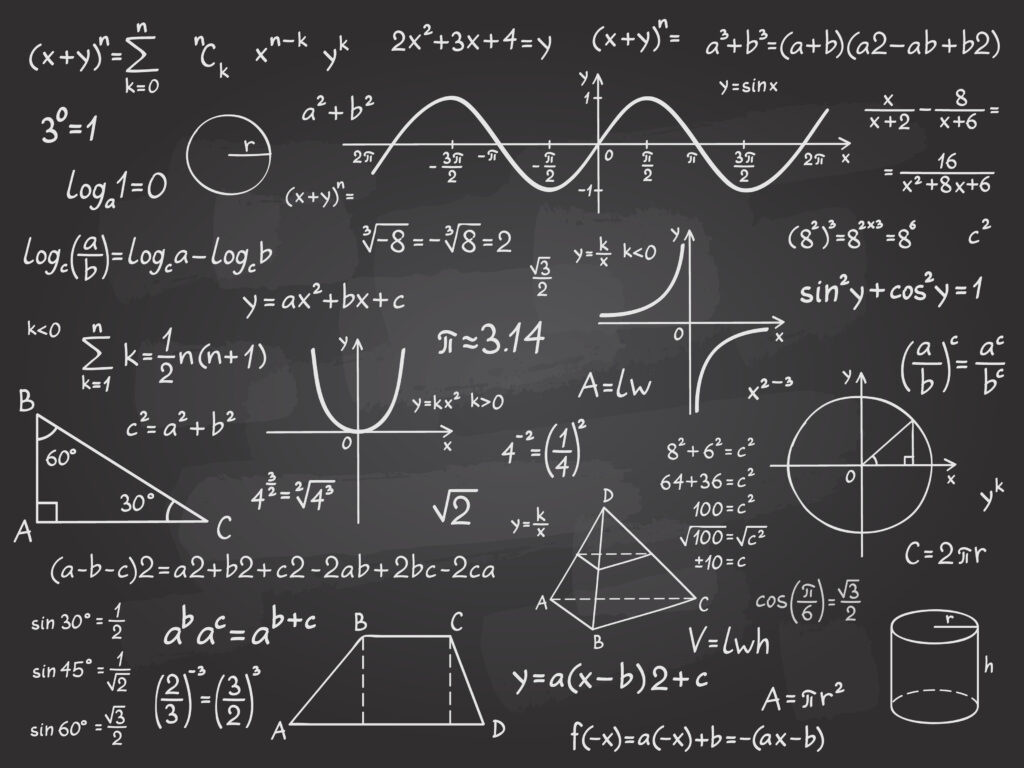
The course develops students’ understanding of mathematics as a tool for reasoning, modelling and problem-solving in real-world and abstract contexts. You’ll study pure mathematics, mechanics and statistics, learning to apply logical thinking, mathematical techniques and analytical skills in both familiar and unfamiliar scenarios.

Objectives

  • Develop a deep conceptual understanding of mathematical principles and methods.
  • Acquire and apply mathematical techniques to solve problems, model situations and interpret results.
  • Build analytical, logical and quantitative skills through reasoning, proof and mathematical argument.
  • Consider how mathematics is used in a variety of disciplines and real-life contexts.
  • Prepare for further study and careers in mathematics, engineering, economics, data science, finance, physical sciences and computing.

Course Outline

Course Structure

The qualification is divided into three main components:

  • Pure Mathematics – algebra, coordinate geometry, trigonometry, sequences and series, differentiation, integration, vectors, and proof.
  • Mechanics – kinematics, forces and Newton’s laws, moments, and energy principles used to model motion and real-world physical systems.
  • Statistics – data collection and presentation, probability, distributions, correlation, hypothesis testing, and interpretation of results.

Assessment

  • Linear Assessment: All exams taken at the end of the two-year course.
  • Three External Papers:
  • Pure Mathematics 1
  • Pure Mathematics 2
  • Statistics and Mechanics
  • Each paper includes a balance of short, structured and extended response questions requiring both technique and reasoning.

Key Skills Developed

  • Analytical thinking and quantitative reasoning
  • Abstract problem-solving and logical argumentation
  • Modelling and interpreting real-world data
  • Technical accuracy and clear mathematical communication
  • Use of technology and statistical tools

Future courses and possible careers

Mathematician • Data Scientist • Engineer • Economist • Actuary • Statistician • Financial Analyst • Computer Scientist • Research Scientist • Quantitative Analyst • Teaching • Physical Sciences

A Level Maths is taken as a fourth subject. As part of the IBCP it can be taken alongside BTEC Engineering or alongside 3 IB Diplomas on the Academic pathway.